

Events
Past Event
WED@NICO SEMINAR: Steve Cicala, University of Chicago "Imperfect Markets versus Imperfect Regulation in U.S. Electricity Generation"
Northwestern Institute on Complex Systems (NICO)
12:00 PM
//
Lower Level, Chambers Hall
Details
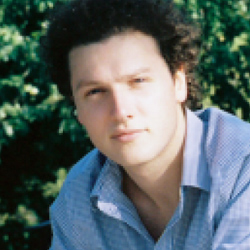
Speaker:
Steve Cicala - Assistant Professor, University of Chicago Harris School of Public Policy
Title:
Imperfect Markets versus Imperfect Regulation in U.S. Electricity Generation
Abstract:
This paper evaluates changes in electricity generation costs caused by the introduction of market mechanisms to allocate production in the United States. I use the staggered transition to markets from 1999-2012 to estimate the causal impact of liberalization using a differences-in-differences design on a comprehensive hourly panel of electricity demand, generators' costs, capacities, and output. I find that markets reduce production costs by 5% by reallocating production: Gains from trade across service areas increase by 55% based on a 25% increase in traded electricity, and costs from using uneconomical units fall 16%.
Speaker Bio:
Steve Cicala is an assistant professor at the University of Chicago Harris School of Public Policy and a Faculty Research Fellow at the National Bureau of Economic Research. His work focuses on the economics of regulation, particularly with respect to environmental and energy policy.
Live Stream:
Time
Wednesday, October 16, 2019 at 12:00 PM - 1:00 PM
Location
Lower Level, Chambers Hall Map
Contact
Calendar
Northwestern Institute on Complex Systems (NICO)
WED@NICO SEMINAR: Mayank Agrawal, Proof of Human "The Invisible Turing Test for the Internet"
Northwestern Institute on Complex Systems (NICO)
12:00 PM
//
Lower Level, Chambers Hall
Details
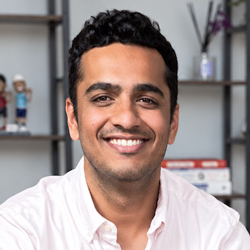
Speaker:
Mayank Agrawal, Co-founder and CEO, Proof of Human
Title:
Proof of Human: the Invisible Turing Test for the Internet
Abstract:
This presentation introduces the Process Turing Test, a new framework for distinguishing humans from AI that goes beyond linguistic output to analyze behavioral dynamics. As LLMs routinely pass text-based Turing Tests, we need methods that probe the underlying architecture of intelligence through perception, control, and decision-making patterns. Using process tracing data from canonical cognitive tasks, we demonstrate how behavioral embeddings capture computational signatures unique to human cognition. This provides robust proof-of-personhood that resists adversarial attacks while revealing fundamental principles about how humans and machines process information differently.
Speaker Bio:
Mayank Agrawal is the co-founder and CEO of Proof of Human, a research and deployment company building the proof-of-human layer in digital identity. The company develops high-impact research and translates that work into systems for bot detection, fraud prevention, and continuous authentication. Mayank’s work focuses on new approaches to distinguishing humans from AI through behavioral and cognitive signals. He earned his PhD in Psychology and Neuroscience from Princeton University, where he studied computational models of human decision-making with Jonathan Cohen, Tom Griffiths, and Nathaniel Daw. His research spans cognitive science, machine learning, and artificial intelligence, with work published in Science, PNAS, and Psychological Review. He previously studied Computer Science and Philosophy at Swarthmore College.
Location:
In person: Chambers Hall, 600 Foster Street, Lower Level
Remote option: https://northwestern.zoom.us/j/96392420891
About the Speaker Series:
Wednesdays@NICO is a vibrant weekly seminar series focusing broadly on the topics of complex systems, networks, and artificial intelligence. It brings together attendees ranging from graduate students to senior faculty who span all of the schools across Northwestern, from applied math to sociology to biology and every discipline in-between. Please visit: https://bit.ly/WedatNICO for information on future speakers.
Time
Wednesday, November 11, 2026 at 12:00 PM - 1:00 PM
Location
Lower Level, Chambers Hall Map
Contact
Calendar
Northwestern Institute on Complex Systems (NICO)