
Events
Past Event
WED@NICO WEBINAR: Mirta Galesic, Santa Fe Institute "What can small, biased crowds tell us about societal trends?"
Northwestern Institute on Complex Systems (NICO)
12:00 PM
Details
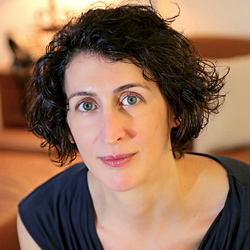
Speaker:
Mirta Galesic, Professor, Santa Fe Institute
Title:
What can small, biased crowds tell us about societal trends?
Abstract:
Societal trends can be difficult to predict. A case in point are elections, where pollsters typically ask people about their own voting intentions, and sometimes also to forecast election results. Recent examples have shown that these questions do not always predict the election winner, even when results are adjusted using expert judgment and models. In this talk I will present results from several recent elections suggesting that polls asking people about voting intentions of their family and friends can produce better election forecasts. These social circle questions also help predict individuals’ voting behavior and their forecasting accuracy. We are currently using those questions to try to predict US 2020 elections. Similar questions improve predictions of vaccination behavior, suggesting that the local wisdom of small and biased crowds can help improve predictions of societal trends.
Speaker Bio:
Mirta Galesic is Professor at the Santa Fe Institute, External Faculty at the Complexity Science Hub in Vienna, Austria, and Associate Researcher at the Harding Center for Risk Literacy at the University of Potsdam, Germany. She studies how simple cognitive mechanisms interact with properties of the external environment to produce seemingly complex social phenomena. In one line of research, she investigates how apparent cognitive biases in social judgments emerge as a product of the interplay of well-adapted minds and the statistical structure of social environments. In another, she studies how collective performance depend on the interaction of group decision strategies and network structures. A third line of research investigates opinion dynamics in real-world societies using cognitively-enriched models from statistical physics. And, she studies how people understand and cope with uncertainty and complexity inherent in many everyday decisions.
Webinar:
https://northwestern.zoom.us/j/98459646215
Webinar ID: 984 5964 6215
Passcode: nico
About the Speaker Series:
Wednesdays@NICO is a vibrant weekly seminar series focusing broadly on the topics of complex systems and data science. It brings together attendees ranging from graduate students to senior faculty who span all of the schools across Northwestern, from applied math to sociology to biology and every discipline in-between.
Time
Wednesday, October 14, 2020 at 12:00 PM - 1:00 PM
Contact
Calendar
Northwestern Institute on Complex Systems (NICO)
No classes - Memorial Day - University offices are closed
University Academic Calendar
All Day
Details
No classes - Memorial Day - University offices are closed
Time
Monday, May 25, 2026
Contact
Calendar
University Academic Calendar
Data Science Nights - MAY 2026 - Speaker: Xudong Tang, Computer Science and NICO
Northwestern Institute on Complex Systems (NICO)
5:30 PM
//
M416, Technological Institute
Details
MAY MEETING: Thursday, May 28, 2026 at 5:30pm (US Central)
LOCATION:
ESAM Conference Room, Tech M416
2145 Sheridan Road, Evanston, IL 60208
AGENDA:
5:30pm - Meet and greet with refreshments
6:00pm - Talk with Xudong Tang, PhD Student, Computer Science, NICO, and the Human-AI Collaboration Lab, Northwestern University
TALK TITLE:
Human and Machine Perception of Voice Similarity
ABSTRACT:
Modern voice cloning systems generate synthetic speech that listeners frequently cannot identify as being synthetic. But a voice can sound natural without sounding like the intended person, and what determines whether a clone is heard as a particular person is an open question. Here we report a large-scale preregistered experiment in which we collected 92,239 responses from 175 participants on their perception of pairs of real recordings, voice clones, and continuously morphed voices drawn from 100 contemporary celebrities across 20 speaker groups. We find that voice clones do not reliably preserve perceived speaker identity, reducing same-speaker judgments by 12.7 percentage points even though the clones are produced by a state-of-the-art text-to-speech model, while leaving different-speaker judgments unchanged. Using continuously morphed stimuli, we find that speakers vary substantially in how much variation their perceived identity tolerates, and that this variation is not predicted by speaker demographics. Speaker embeddings account for 58.9\% (95\% CI = [55.7, 61.9]) of variance in identity judgments, which is more than acoustic features, social attributes, and clone status combined. Once all these observed features are accounted for, clone status adds no additional predictive power. These results shows that the perceptual impact of voice cloning is positional rather than categorical: we can model how listeners judge a voice by how close it falls to the perceptual boundary that defines each speaker's recognizable voice, applying the same criterion to real and synthetic speech alike.
DATA SCIENCE NIGHTS are monthly meetings featuring presentations and discussions about data-driven science and complex systems, organized by Northwestern University graduate students and scholars. Students and researchers of all levels are welcome! For more information: http://bit.ly/nico-dsn
FUTURE DATES:
Data Science Nights will return in September!
Time
Thursday, May 28, 2026 at 5:30 PM - 7:00 PM
Location
M416, Technological Institute Map
Contact
Calendar
Northwestern Institute on Complex Systems (NICO)
Spring 2026 Commencement
University Academic Calendar
All Day
Details
Spring 2026 Commencement
Time
Sunday, June 14, 2026
Contact
Calendar
University Academic Calendar
Juneteenth - University Closed
University Academic Calendar
All Day
Details
Juneteenth - University Closed
Time
Friday, June 19, 2026
Contact
Calendar
University Academic Calendar
Independence Day (observed) - University Closed
University Academic Calendar
All Day
Details
Independence Day (observed) - University Closed
Time
Friday, July 3, 2026
Contact
Calendar
University Academic Calendar
Fall 2026 Classes Begin
University Academic Calendar
All Day
Details
Fall 2026 Classes Begin
Time
Wednesday, September 23, 2026
Contact
Calendar
University Academic Calendar