

Events
Past Event
WED@NICO SEMINAR: Lightning Talks with Northwestern Fellows and Scholars!
Northwestern Institute on Complex Systems (NICO)
12:00 PM
//
Lower Level, Chambers Hall
Details
NICO is hosting a lightning talk seminar each term as a part of our Wednesdays@NICO seminar series. Northwestern graduate students and postdoctoral fellows are invited to participate. To sign up for future lightning talks, please visit: https://bit.ly/2lRqSXK
FALL 2019 SPEAKERS
Diego Gómez-Zará - Ph.D. Candidate, Technology and Social Behavior
Title: A Network Approach to the Formation of Self-assembled Teams
Abstract: Which individuals in a network make the most appealing teammates? Which invitations are most likely to be accepted? And which are most likely to be rejected? This study explores the factors that are most likely to explain the selection, acceptance, and rejection of invitations in self-assembling teams. We conducted a field study with 780 participants using an online platform that enables people to form teams. Participants completed an initial survey assessing traits, relationships, and skills. Next, they searched for and invited others to join a team. Recipients could then accept, reject, or ignore invitations. Using Exponential Random Graph Models (ERGMs), we studied how traits and social networks influence teammate choices. Our results demonstrated that (a) agreeable leaders with high psychological collectivism send invitations most frequently, (b) previous collaborators, leaders, competent workers, females, and younger individuals receive the most invitations, and (c) rejections are concentrated in the hands of a few.
Alex Mercanti - Ph.D Candidate, Engineering Sciences & Applied Mathematics
Title: Protecting your privacy in machine learning using randomness.
Abstract: Machine learning models are commonly trained over datasets that contain personal information about people and their daily routine, health, online activity, and social behavior. Although these models play a crucial role in modern software applications, the extent to which trained machine learning models leak private and sensitive features of their respective training data remains poorly understood. In this talk, I will discuss the privacy risks associated with publicly releasing trained machine learning models and will demonstrate that the addition of random noise to training algorithms guarantees privacy for each individual in the training dataset at minimal cost to the accuracy of the model.
Kyosuke Tanaka - Ph.D Candidate, Media, Technology, and Society
Title: How dispositional and positional factors affect an individual’s ability to efficiently route messages in a network
Abstract: Milgram’s small-world experiment provided evidence for six degrees of separation, on average a chain of five contacts separated any two random people in the world. However, this was only true for those messages that reached the final destination. While, in theory, the small-world phenomenon is structurally common in social networks, empirical evidence shows that human navigation of small-world social networks is remarkably challenging. Messages often reach the intended destination via a longer path than expected, get enmeshed in loops, and/or often never reach it. This leads to painful consequences for organizations that require information routing to share (or retrieve) knowledge among their members. Extreme examples of these failures contributed to the loss of the space shuttles Challenger and Columbia. Here, I present a study of an understudied type of error—network routing—and introduce network acuity to conceptualize and operationalize an individual’s ability to efficiently route messages. Using, 6-DoS (Six Degrees of Separation), a network routing task based on Milgram’s small-world experiment with 435 individuals organized into 25 networks, I explored two types of factors that impact an individual’s network acuity: positional factors (where you are in the network) and dispositional factors (who you are). Results show that (a) those in the core or brokerage position had high network acuity than did peripheral or non-bridge members, (b) neuroticism was positively associated with acuity, (c) conscientiousness was negatively associated with acuity. Further, individuals’ network positions impacted network acuity more than dispositional characteristics. The results of this experimental study illustrate not only the usefulness of the concept of network acuity to characterize network routing errors but also advance our understanding of factors that explain variance in individuals' network acuity.
Alexandria Volkening - NSF-Simons Fellow, NSF-Simons Center for Quantitative Biology
Title: Forecasting U.S. elections with compartmental models of infection
Abstract: U.S. election forecasting involves polling likely voters, making assumptions about voter turnout, and accounting for various features such as state demographics and voting history. While political elections in the United States are decided at the state level, errors in forecasting are correlated between states. With the goal of shedding light on the forecasting process and exploring how states influence each other, we develop a framework for forecasting elections in the U.S. from the perspective of dynamical systems. Through an interdisciplinary approach that borrows ideas from epidemiology, we show how to combine a compartmental model with public polling data from HuffPost and RealClearPolitics to forecast gubernatorial, senatorial, and presidential elections at the state level. Our results for the 2012 and 2016 U.S. races are largely in agreement with those of popular sources, and we use our model to explore how subjective choices about uncertainty impact results. We conclude by comparing our forecasts for the 2018 midterms with those of popular analysts, and we discuss future directions related to the 2020 elections. This is joint work with Daniel Linder (Augusta Univ.), Mason Porter (UCLA), and Grzegorz Rempala (Ohio State Univ.).
Live Stream:
Time
Wednesday, December 4, 2019 at 12:00 PM - 1:00 PM
Location
Lower Level, Chambers Hall Map
Contact
Calendar
Northwestern Institute on Complex Systems (NICO)
WED@NICO SEMINAR: Mayank Agrawal, Proof of Human "The Invisible Turing Test for the Internet"
Northwestern Institute on Complex Systems (NICO)
12:00 PM
//
Lower Level, Chambers Hall
Details
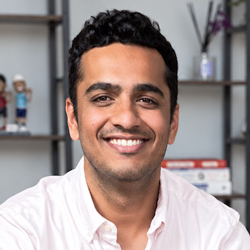
Speaker:
Mayank Agrawal, Co-founder and CEO, Proof of Human
Title:
Proof of Human: the Invisible Turing Test for the Internet
Abstract:
This presentation introduces the Process Turing Test, a new framework for distinguishing humans from AI that goes beyond linguistic output to analyze behavioral dynamics. As LLMs routinely pass text-based Turing Tests, we need methods that probe the underlying architecture of intelligence through perception, control, and decision-making patterns. Using process tracing data from canonical cognitive tasks, we demonstrate how behavioral embeddings capture computational signatures unique to human cognition. This provides robust proof-of-personhood that resists adversarial attacks while revealing fundamental principles about how humans and machines process information differently.
Speaker Bio:
Mayank Agrawal is the co-founder and CEO of Proof of Human, a research and deployment company building the proof-of-human layer in digital identity. The company develops high-impact research and translates that work into systems for bot detection, fraud prevention, and continuous authentication. Mayank’s work focuses on new approaches to distinguishing humans from AI through behavioral and cognitive signals. He earned his PhD in Psychology and Neuroscience from Princeton University, where he studied computational models of human decision-making with Jonathan Cohen, Tom Griffiths, and Nathaniel Daw. His research spans cognitive science, machine learning, and artificial intelligence, with work published in Science, PNAS, and Psychological Review. He previously studied Computer Science and Philosophy at Swarthmore College.
Location:
In person: Chambers Hall, 600 Foster Street, Lower Level
Remote option: https://northwestern.zoom.us/j/96392420891
About the Speaker Series:
Wednesdays@NICO is a vibrant weekly seminar series focusing broadly on the topics of complex systems, networks, and artificial intelligence. It brings together attendees ranging from graduate students to senior faculty who span all of the schools across Northwestern, from applied math to sociology to biology and every discipline in-between. Please visit: https://bit.ly/WedatNICO for information on future speakers.
Time
Wednesday, November 11, 2026 at 12:00 PM - 1:00 PM
Location
Lower Level, Chambers Hall Map
Contact
Calendar
Northwestern Institute on Complex Systems (NICO)