

Events
Past Event
WED@NICO SEMINAR: Johan Koskinen, University of Manchester "Modelling large, messy, and sampled network data"
Northwestern Institute on Complex Systems (NICO)
12:00 PM
//
Lower Level, Chambers Hall
Details
Title:
Modelling large, messy, and sampled network data – problems and prospects for principled analysis of real social networks
Speaker:
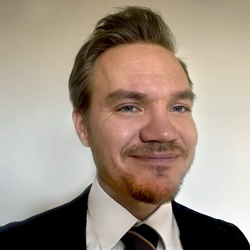
Johan Koskinen - Lecturer in Social Statistics, Cathie Marsh Institute for Social Research, University of Manchester
Talk Abstract:
The social network analysis (SNA) paradigm has proved a powerful and intuitive explanatory perspective that has recently gained new currency under the more general moniker of network science. SNA draws on graph theory and social entities are conceived of as nodes in a graph connected by lines (or edges), representing how people, organisations, countries, etc. are relationally tied. Having a network perspective results in compelling pictures of the social web; insightful summary measures capturing both positions of individuals and properties of the network; as well as the possibility of statistical modelling of how nodes are connected. Here we consider the latter - statistical modelling of the network. In particular we are considering modelling tie-variables using exponential random graph models (ERGM). ERGMs have their origin in statistical mechanics and are intimately related to Markov random fields and the classic Ising and Potts models. For social networks, in contrast to, say, particle spins on a lattice, the modelling often turns out to be much more complicated but also giving rise to richer models. Here we discuss some issues associated with modelling social networks based on empirical data. Among the challenges of this domain are specifying the boundary of the network and accounting for the often partial nature of data. Additionally, seeing as social networks cannot typically be collected automatically (through for example scraping on-line sources), we have to rely on observational data that is often laden with error. Among the opportunities that real social network data offers is that you may explore the full complexity of people’s relations. People are not only tied to other people but also affiliated with organisations, places, and events. We present these different aspects in the context of a number of illustrative datasets where information is collected and collated from different sources.
Speaker Bio:
Johan Koskinen joined the Department of Social Statistics at the University of Manchester in 2011 having previously worked at the Universities of Stockholm, Melbourne and Oxford. Dr Koskinen has contributed extensively to methodological development in social network analysis to enabled innovative applications by several disciplines. He is one of the co-authors of the RSiena statistical network analysis package for longitudinal network analysis and a contributor to the MPnet software package, one of the most commonly used statistical software packages for network analysis. His methodological contributions are often developed in collaboration over substantive research projects with applied researchers and he is active in disseminating best practices through frequent workshops. He has also co-written two books on social network research methods aimed at practitioners. One of them a book on exponential random graph models (Cambridge University Press) that was awarded the 2016 Harrison White Book Award by the American Sociological Association. His current research concentrates on extending current statistical methodology for modelling social interaction to social networks of multiple types of nodes using data collated and collected from different sources
Live Stream:
Time
Wednesday, September 27, 2017 at 12:00 PM - 1:00 PM
Location
Lower Level, Chambers Hall Map
Contact
Calendar
Northwestern Institute on Complex Systems (NICO)
WED@NICO SEMINAR: Mayank Agrawal, Proof of Human "The Invisible Turing Test for the Internet"
Northwestern Institute on Complex Systems (NICO)
12:00 PM
//
Lower Level, Chambers Hall
Details
Speaker:
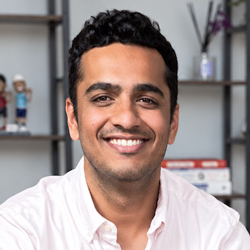
Mayank Agrawal, Co-founder and CEO, Proof of Human
Title:
Proof of Human: the Invisible Turing Test for the Internet
Abstract:
This presentation introduces the Process Turing Test, a new framework for distinguishing humans from AI that goes beyond linguistic output to analyze behavioral dynamics. As LLMs routinely pass text-based Turing Tests, we need methods that probe the underlying architecture of intelligence through perception, control, and decision-making patterns. Using process tracing data from canonical cognitive tasks, we demonstrate how behavioral embeddings capture computational signatures unique to human cognition. This provides robust proof-of-personhood that resists adversarial attacks while revealing fundamental principles about how humans and machines process information differently.
Speaker Bio:
Mayank Agrawal is the co-founder and CEO of Proof of Human, a research and deployment company building the proof-of-human layer in digital identity. The company develops high-impact research and translates that work into systems for bot detection, fraud prevention, and continuous authentication. Mayank’s work focuses on new approaches to distinguishing humans from AI through behavioral and cognitive signals. He earned his PhD in Psychology and Neuroscience from Princeton University, where he studied computational models of human decision-making with Jonathan Cohen, Tom Griffiths, and Nathaniel Daw. His research spans cognitive science, machine learning, and artificial intelligence, with work published in Science, PNAS, and Psychological Review. He previously studied Computer Science and Philosophy at Swarthmore College.
Location:
In person: Chambers Hall, 600 Foster Street, Lower Level
Remote option: https://northwestern.zoom.us/j/96392420891
About the Speaker Series:
Wednesdays@NICO is a vibrant weekly seminar series focusing broadly on the topics of complex systems, networks, and artificial intelligence. It brings together attendees ranging from graduate students to senior faculty who span all of the schools across Northwestern, from applied math to sociology to biology and every discipline in-between. Please visit: https://bit.ly/WedatNICO for information on future speakers.
Time
Wednesday, November 11, 2026 at 12:00 PM - 1:00 PM
Location
Lower Level, Chambers Hall Map
Contact
Calendar
Northwestern Institute on Complex Systems (NICO)