

Events
Past Event
Science of Science Chicago: Third Meeting on May 23rd
Northwestern Institute on Complex Systems (NICO)
3:00 PM
//
Baldwin Auditorium Robert H Lurie Medical Research Center
Details

Science of Science Chicago: Third Meeting on May 23rd
About:
These monthly meetings at Northwestern's Medical Campus are for people who are interested in research on Science of Science in the Chicago area. We hope to create a shared regular meeting place for scientific exchange and discussion across different universities, and university campuses, and different methodological approaches, and scientific backgrounds.
Whether you do active research on Science of Science or are just interested in that area, please feel welcome. Science of Science is a young discipline whose perspectives may be sociological, economic, data-scientific, bibliometric, network-scientific, genomic, or historic.
Program
3.00 - 3.05 Introduction
3.05 - 3.35 Laura Trouille (Adler Planetarium, Zooniverse)
Zooniverse: Lessons Learned and Frontier Efforts in Unlocking Data through Citizen Science with 1.5 Million Volunteers
3.35 - 4.05 Valentin Danchev (UChicago, Knowledge lab)
Reinventing the Classics: Present Influences on Past Scholarship
4.05 - 4.25 Coffee Break
4.25 - 4.55 Qing Jin (NICO, Dashun Wang lab)
Understanding Complex Substitutive Systems
4.55 - 5.00 Concluding Remarks
Time
Tuesday, May 23, 2017 at 3:00 PM - 5:00 PM
Location
Baldwin Auditorium Robert H Lurie Medical Research Center Map
Contact
Calendar
Northwestern Institute on Complex Systems (NICO)
WED@NICO SEMINAR: Mayank Agrawal, Proof of Human "The Invisible Turing Test for the Internet"
Northwestern Institute on Complex Systems (NICO)
12:00 PM
//
Lower Level, Chambers Hall
Details
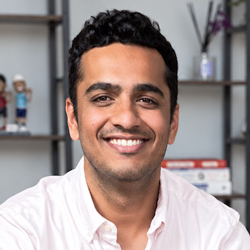
Speaker:
Mayank Agrawal, Co-founder and CEO, Proof of Human
Title:
Proof of Human: the Invisible Turing Test for the Internet
Abstract:
This presentation introduces the Process Turing Test, a new framework for distinguishing humans from AI that goes beyond linguistic output to analyze behavioral dynamics. As LLMs routinely pass text-based Turing Tests, we need methods that probe the underlying architecture of intelligence through perception, control, and decision-making patterns. Using process tracing data from canonical cognitive tasks, we demonstrate how behavioral embeddings capture computational signatures unique to human cognition. This provides robust proof-of-personhood that resists adversarial attacks while revealing fundamental principles about how humans and machines process information differently.
Speaker Bio:
Mayank Agrawal is the co-founder and CEO of Proof of Human, a research and deployment company building the proof-of-human layer in digital identity. The company develops high-impact research and translates that work into systems for bot detection, fraud prevention, and continuous authentication. Mayank’s work focuses on new approaches to distinguishing humans from AI through behavioral and cognitive signals. He earned his PhD in Psychology and Neuroscience from Princeton University, where he studied computational models of human decision-making with Jonathan Cohen, Tom Griffiths, and Nathaniel Daw. His research spans cognitive science, machine learning, and artificial intelligence, with work published in Science, PNAS, and Psychological Review. He previously studied Computer Science and Philosophy at Swarthmore College.
Location:
In person: Chambers Hall, 600 Foster Street, Lower Level
Remote option: https://northwestern.zoom.us/j/96392420891
About the Speaker Series:
Wednesdays@NICO is a vibrant weekly seminar series focusing broadly on the topics of complex systems, networks, and artificial intelligence. It brings together attendees ranging from graduate students to senior faculty who span all of the schools across Northwestern, from applied math to sociology to biology and every discipline in-between. Please visit: https://bit.ly/WedatNICO for information on future speakers.
Time
Wednesday, November 11, 2026 at 12:00 PM - 1:00 PM
Location
Lower Level, Chambers Hall Map
Contact
Calendar
Northwestern Institute on Complex Systems (NICO)