

Events
Past Event
Wednesdays@NICO Seminar: How do organisms build themselves?
Northwestern Institute on Complex Systems (NICO)
12:00 PM
//
Donald P. Jacobs Center
Details
How do organisms build themselves?
Wednesdays@NICO | 12:00-1:00 PM, May 11, 2016 | Room 160, Jacobs Center, 2001 Sheridan Road, Northwestern University
Madhav Mani, Assistant Professor of Engineering Sciences and Applied Mathematics, McCormick School of Engineering
Abstract
Addressing, or even precisely stating, this question is beyond science currently. Thus far the most successful approach to understanding how growth, differentiation, and morphogenesis -- the 3 pillars of development -- are coordinated in a developing organism has been a genetic one. After a historical review of the landmark discoveries of developmental genetics, I will give an overview of research in my own lab that employs tools common to physics. These tools are used to develop phenomenological, but quantitative, descriptions of the dynamics of development -- attempting to capture how development occurs, rather than why. In particular, I will present work on cell mechanics and gene regulation in the context of the developing fly embryo done in collaboration with experimental collaborators (Gregor Lab @ Princeton & Lecuit Lab @ Marseilles).
Bio
This is an exciting time to be studying organismal development. In spite of the progress in molecular biology built up over the last 3 decades, we are still searching for the mechanisms that couple the chemical and physical forms of organism. A misshaped hand, even with the right proportions of different cell types, wouldn't be of much use in gripping a cup of coffee. What are the collective cellular and tissue level mechanisms that generate the complex multicellular patterns of cellular differentiation and morphology in organisms? Recent advance in live fluorescent imaging provide us with a dynamic and spatially resolved view of organismal development, and what is needed now is the development of mathematical tools and models that can help ushering in a new, and physical, understanding of organismal biology. Complementing our interests in developmental biology is our study of gene regulation. In particular, we focus on stochastic and biophysical aspects of gene expression dynamics within the context of developmental systems.
In close collaboration with experimental labs around the world, my group develops quantitative image-analysis tools and mathematical models that guide the construction of inverse modeling schemes to make new and better measurements of live imaging data. When required, forward mathematical models are constructed to make sense of emergent phenomena, and more importantly, to generate predictions and hypotheses that guide future experimentation.
Time
Wednesday, May 11, 2016 at 12:00 PM - 1:00 PM
Location
Donald P. Jacobs Center Map
Contact
Calendar
Northwestern Institute on Complex Systems (NICO)
WED@NICO SEMINAR: Mayank Agrawal, Proof of Human "The Invisible Turing Test for the Internet"
Northwestern Institute on Complex Systems (NICO)
12:00 PM
//
Lower Level, Chambers Hall
Details
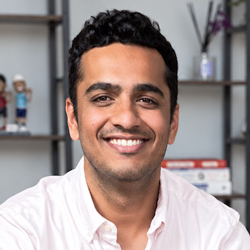
Speaker:
Mayank Agrawal, Co-founder and CEO, Proof of Human
Title:
Proof of Human: the Invisible Turing Test for the Internet
Abstract:
This presentation introduces the Process Turing Test, a new framework for distinguishing humans from AI that goes beyond linguistic output to analyze behavioral dynamics. As LLMs routinely pass text-based Turing Tests, we need methods that probe the underlying architecture of intelligence through perception, control, and decision-making patterns. Using process tracing data from canonical cognitive tasks, we demonstrate how behavioral embeddings capture computational signatures unique to human cognition. This provides robust proof-of-personhood that resists adversarial attacks while revealing fundamental principles about how humans and machines process information differently.
Speaker Bio:
Mayank Agrawal is the co-founder and CEO of Proof of Human, a research and deployment company building the proof-of-human layer in digital identity. The company develops high-impact research and translates that work into systems for bot detection, fraud prevention, and continuous authentication. Mayank’s work focuses on new approaches to distinguishing humans from AI through behavioral and cognitive signals. He earned his PhD in Psychology and Neuroscience from Princeton University, where he studied computational models of human decision-making with Jonathan Cohen, Tom Griffiths, and Nathaniel Daw. His research spans cognitive science, machine learning, and artificial intelligence, with work published in Science, PNAS, and Psychological Review. He previously studied Computer Science and Philosophy at Swarthmore College.
Location:
In person: Chambers Hall, 600 Foster Street, Lower Level
Remote option: https://northwestern.zoom.us/j/96392420891
About the Speaker Series:
Wednesdays@NICO is a vibrant weekly seminar series focusing broadly on the topics of complex systems, networks, and artificial intelligence. It brings together attendees ranging from graduate students to senior faculty who span all of the schools across Northwestern, from applied math to sociology to biology and every discipline in-between. Please visit: https://bit.ly/WedatNICO for information on future speakers.
Time
Wednesday, November 11, 2026 at 12:00 PM - 1:00 PM
Location
Lower Level, Chambers Hall Map
Contact
Calendar
Northwestern Institute on Complex Systems (NICO)