

Events
Past Event
Wednesdays@NICO Seminar: Community Structure in Complex Networks
Northwestern Institute on Complex Systems (NICO)
12:00 PM
//
Lower Level Chambers Hall
Details
Community Structure in Complex Networks
Santo Fortunato, Professor of Complex Systems, Department of Biomedical Engineering and Computational Science, Aalto University
Abstract
Complex systems typically display a modular structure, as modules are easier to assemble than the individual units of the system, and more resilient to failures. In the network representation of complex systems, modules, or communities, appear as subgraphs whose nodes have an appreciably larger probability to get connected to each other than to other nodes of the network. In this talk I will address three fundamental questions: How is community structure generated? How to detect it? How to test the performance of community detection algorithms? I will show that communities emerge naturally in growing network models favoring triadic closure, a mechanism necessary to implement for the generation of large classes of systems, like e.g., social networks. I will discuss the limits of the most popular class of clustering algorithms, those based on the optimization of a global quality function, like modularity maximization. Testing algorithms is probably the single most important issue of network community detection, as it implicitly involves the concept of community, which is still controversial. I will discuss the importance of using realistic benchmark graphs with built-in community structure.
Bio
Santo Fortunato is Professor of Complex Systems at the Department of Computer Science of Aalto University, Finland. Previously he was director of the Sociophysics Laboratory at the Institute for Scientific Interchange in Turin, Italy. Prof. Fortunato got his PhD in Theoretical Particle Physics at the University of Bielefeld In Germany. He then moved to the field of complex systems, via a postdoctoral appointment at the School of Informatics and Computing of Indiana University. His current focus areas are network science, especially community detection in graphs, computational social science and science of science. His research has been published in leading journals, including Nature, PNAS, Physical Review Letters, Reviews of Modern Physics, Physics Reports and has collected about 15,000 citations (Google Scholar). His review article Community detection in graphs (Physics Reports 486, 75-174, 2010) is the most cited paper on networks of the last years. He received the Young Scientist Award for Socio- and Econophysics 2011, a prize given by the German Physical Society, for his outstanding contributions to the physics of social systems.
Time
Wednesday, February 24, 2016 at 12:00 PM - 1:00 PM
Location
Lower Level Chambers Hall Map
Contact
Calendar
Northwestern Institute on Complex Systems (NICO)
WED@NICO SEMINAR: Mayank Agrawal, Proof of Human "The Invisible Turing Test for the Internet"
Northwestern Institute on Complex Systems (NICO)
12:00 PM
//
Lower Level, Chambers Hall
Details
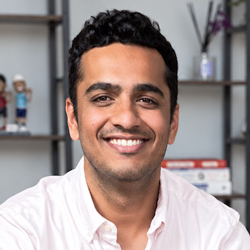
Speaker:
Mayank Agrawal, Co-founder and CEO, Proof of Human
Title:
Proof of Human: the Invisible Turing Test for the Internet
Abstract:
This presentation introduces the Process Turing Test, a new framework for distinguishing humans from AI that goes beyond linguistic output to analyze behavioral dynamics. As LLMs routinely pass text-based Turing Tests, we need methods that probe the underlying architecture of intelligence through perception, control, and decision-making patterns. Using process tracing data from canonical cognitive tasks, we demonstrate how behavioral embeddings capture computational signatures unique to human cognition. This provides robust proof-of-personhood that resists adversarial attacks while revealing fundamental principles about how humans and machines process information differently.
Speaker Bio:
Mayank Agrawal is the co-founder and CEO of Proof of Human, a research and deployment company building the proof-of-human layer in digital identity. The company develops high-impact research and translates that work into systems for bot detection, fraud prevention, and continuous authentication. Mayank’s work focuses on new approaches to distinguishing humans from AI through behavioral and cognitive signals. He earned his PhD in Psychology and Neuroscience from Princeton University, where he studied computational models of human decision-making with Jonathan Cohen, Tom Griffiths, and Nathaniel Daw. His research spans cognitive science, machine learning, and artificial intelligence, with work published in Science, PNAS, and Psychological Review. He previously studied Computer Science and Philosophy at Swarthmore College.
Location:
In person: Chambers Hall, 600 Foster Street, Lower Level
Remote option: https://northwestern.zoom.us/j/96392420891
About the Speaker Series:
Wednesdays@NICO is a vibrant weekly seminar series focusing broadly on the topics of complex systems, networks, and artificial intelligence. It brings together attendees ranging from graduate students to senior faculty who span all of the schools across Northwestern, from applied math to sociology to biology and every discipline in-between. Please visit: https://bit.ly/WedatNICO for information on future speakers.
Time
Wednesday, November 11, 2026 at 12:00 PM - 1:00 PM
Location
Lower Level, Chambers Hall Map
Contact
Calendar
Northwestern Institute on Complex Systems (NICO)