

Events
Past Event
WED@NICO SEMINAR: Chris Kuzawa, Northwestern University "Fetal developmental plasticity as signal-noise problem: the case of nutrients and stress physiology"
Northwestern Institute on Complex Systems (NICO)
12:00 PM
//
Lower Level, Chambers Hall
Details
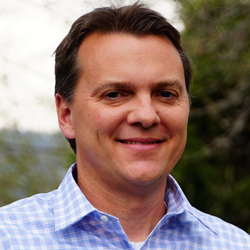
Speaker:
Chris Kuzawa, John D. MacArthur Professor, Department of Anthroplogy, Northwestern University
Title:
Fetal developmental plasticity as signal-noise problem: the case of nutrients and stress physiology
Abstract:
The stage of human development marked by greatest sensitivity and developmental plasticity occurs prior to birth, when the developing embryo and fetus are embedded within the highly regulated intrauterine environment maintained by the mother’s body. In this talk, I will discuss the timescales of maternal experience that modify this milieu, with a focus on two crucial systems: nutrient metabolism and stress physiology. I will argue that elaborate and redundant maternal buffering of nutrient delivery uncouples short term variability in what the mother eats – whether negative changes like famine or improvements in the form of nutritional supplementation - from fetal nutrition and development, which instead track changes in maternal nutrition on a longer, generational timescale. In contrast, stress physiology is by design highly responsive to the mother’s short-term experiences and the responsiveness of these systems have broad spill-over effects on fetal development, thus linking offspring biological and health outcomes to acute variability in maternal stress during pregnancy. I will discuss the relevance of these principles for understanding the evolution of the flow of ecological information across generations and the design of interventions aimed at harnessing early life plasticity to improve future population health.
Speaker Bio:
Chris Kuzawa and his students and collaborators use principles from anthropology and evolutionary biology to gain insights into the biological and health impacts of human developmental plasticity. Thier primary field research is conducted in Cebu, the Philippines, where they work with a large birth cohort study that enrolled more than 3,000 pregnant women in 1983 and has since followed their offspring into adulthood (now 30 years old). They use the nearly 3 decades of data available for each study participant, and recruitment of generation 3 (the grandoffspring of the original mothers), to gain a better understanding of the long-term and intergenerational impacts of early life environments on adult biology, life history, reproduction, and health. A theme of much of this work is the application of principles of developmental plasticity and evolutionary biology to issues of health. Professor Kuzawa is a member of the National Academy of Sciences and American Academy of Arts and Sciences.
Location:
In person: Chambers Hall, 600 Foster Street, Lower Level
Remote option: https://northwestern.zoom.us/j/91503621521
Passcode: NICO23
About the Speaker Series:
Wednesdays@NICO is a vibrant weekly seminar series focusing broadly on the topics of complex systems and data science. It brings together attendees ranging from graduate students to senior faculty who span all of the schools across Northwestern, from applied math to sociology to biology and every discipline in-between. Please visit: https://bit.ly/WedatNICO for information on future speakers.
Time
Wednesday, February 22, 2023 at 12:00 PM - 1:00 PM
Location
Lower Level, Chambers Hall Map
Contact
Calendar
Northwestern Institute on Complex Systems (NICO)
Data Science Nights - OCTOBER 2026 - Speaker: Vamsi Varanasi, Cofounder and CEO of Tuva
Northwestern Institute on Complex Systems (NICO)
5:30 PM
//
E223, Technological Institute
Details

OCTOBER MEETING: Thursday, October 29, 2026 at 5:30pm (US Central)
LOCATION:
ChBE Conference Room, Tech E223
2145 Sheridan Road, Evanston, IL 60208
AGENDA:
5:30pm - Meet and greet with refreshments
6:00pm - Talk with Vamsi Varanasi, Cofounder and CEO of Tuva
SIGN UP:
Please register for this event in advance here: https://luma.com/zftb0rsm
SPEAKER:
Vamsi Varanasi is cofounder and CEO of Tuva and a theoretical biophysicist working with groups at NYU and UChicago, where he studies RNA interactions using statistical physics and machine learning. He previously cofounded Sora ID (acquired by CLEAR) and studied physics and electrical engineering at Stanford.
ABSTRACT:
How are researchers actually using AI? Drawing on conversations with heavy AI adopters in labs at Harvard, Stanford, and UChicago, this talk will highlight strategies that are working. We’ll discuss real use cases from heavy adopters, like agents that handle analysis "no grad student wants to do" and nightly literature bots. We’ll also cover the mental models that super-users are using to think about adapting to rapid model improvement and what it's like building a science tool at an early-stage startup. Aryan Thakur is part of the founding team at Tuva, a startup building tools to help researchers get the most out of AI.
DATA SCIENCE NIGHTS are monthly meetings featuring presentations and discussions about data-driven science and complex systems, organized by Northwestern University graduate students and scholars. Students and researchers of all levels are welcome! For more information: http://bit.ly/nico-dsn
Time
Thursday, October 29, 2026 at 5:30 PM - 7:00 PM
Location
E223, Technological Institute Map
Contact
Calendar
Northwestern Institute on Complex Systems (NICO)
WED@NICO SEMINAR: Hamsa Bastani, University of Pennsylvania "Challenges in Achieving Human-AI Collaboration"
Northwestern Institute on Complex Systems (NICO)
12:00 PM
//
Lower Level, Chambers Hall
Details
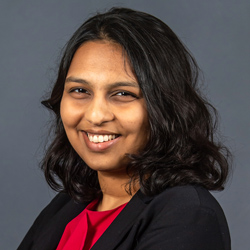
Speaker:
Hamsa Bastani, Associate Professor of Operations, Information, and Decisions, and Statistics and Data Science, Wharton School, University of Pennsylvania
Title:
Designing Human-AI Collaboration to Build Human Expertise
Abstract:
Effective human-AI collaboration not only requires human expertise, but also produces it: how we interact with AI today shapes our capabilities tomorrow. This talk draws on three large-scale field studies to examine how AI can improve immediate performance while supporting long-term skill development.
First, in an experiment with nearly 1,000 high school students in Turkey, we find that unfettered GPT-4 access improves assisted performance but harms short-term learning in mathematics. Second, a 12-week study with chess academies shows that self-regulated AI use (where students can request additional help at any time) substantially reduces learning gains relative to system-regulated assistance. Our analysis suggests that harm is concentrated within students’ “zones of proximal development,” where assistance displaces productive struggle; most requests occur outside this zone, with no evidence of harm. This suggests that targeting assistance to situations where it does not displace productive struggle can preserve AI’s performance benefits while protecting learning. Finally, generative AI is both the poison and the cure: the conversational data generated through human-AI interactions offer a window into users’ knowledge states and problem-solving processes, which contains rich information for targeting assistance. In collaboration with the Taipei City Government’s Department of Education, we use student-chatbot interactions and reinforcement learning to personalize the sequence of practice problems across ten high schools, significantly improving learning over a five-month Python certification course.
Taken together, these studies suggest that AI can be designed to preserve and create opportunities for productive struggle, strengthening the human expertise on which effective collaboration depends. Joint work with Osbert Bastani, Angel Chung, Stefanos Poulidis, Alp Sungu, and others.
Speaker Bio:
Hamsa Bastani is an Associate Professor of Operations, Information, and Decisions at the Wharton School, University of Pennsylvania. Her research focuses on developing novel machine learning algorithms for social impact, including in healthcare and education. She has worked with national governments to deploy algorithms at the country scale for targeted border COVID-19 screening and essential medicine access, and co-led one of the first large field studies of generative AI tutors in high schools. Her research has been published in leading outlets including Nature, Management Science, Operations Research, and PNAS, and has garnered numerous recognitions, including the Wagner Prize for Excellence in Operations Research, the INFORMS Pierskalla Award for best healthcare paper, and the George Nicholson Prize.
Location:
In person: Chambers Hall, 600 Foster Street, Lower Level
Remote option: https://northwestern.zoom.us/j/91360427929
About the Speaker Series:
Wednesdays@NICO is a vibrant weekly seminar series focusing broadly on the topics of complex systems, networks, and artificial intelligence. It brings together attendees ranging from graduate students to senior faculty who span all of the schools across Northwestern, from applied math to sociology to biology and every discipline in-between. Please visit: https://bit.ly/WedatNICO for information on future speakers.
Time
Wednesday, November 4, 2026 at 12:00 PM - 1:00 PM
Location
Lower Level, Chambers Hall Map
Contact
Calendar
Northwestern Institute on Complex Systems (NICO)
WED@NICO SEMINAR: Mayank Agrawal, Proof of Human "The Invisible Turing Test for the Internet"
Northwestern Institute on Complex Systems (NICO)
12:00 PM
//
Lower Level, Chambers Hall
Details
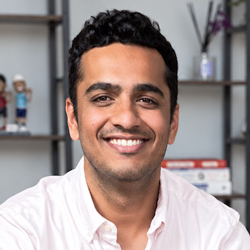
Speaker:
Mayank Agrawal, Co-founder and CEO, Proof of Human
Title:
Proof of Human: the Invisible Turing Test for the Internet
Abstract:
This presentation introduces the Process Turing Test, a new framework for distinguishing humans from AI that goes beyond linguistic output to analyze behavioral dynamics. As LLMs routinely pass text-based Turing Tests, we need methods that probe the underlying architecture of intelligence through perception, control, and decision-making patterns. Using process tracing data from canonical cognitive tasks, we demonstrate how behavioral embeddings capture computational signatures unique to human cognition. This provides robust proof-of-personhood that resists adversarial attacks while revealing fundamental principles about how humans and machines process information differently.
Speaker Bio:
Mayank Agrawal is the co-founder and CEO of Proof of Human, a research and deployment company building the proof-of-human layer in digital identity. The company develops high-impact research and translates that work into systems for bot detection, fraud prevention, and continuous authentication. Mayank’s work focuses on new approaches to distinguishing humans from AI through behavioral and cognitive signals. He earned his PhD in Psychology and Neuroscience from Princeton University, where he studied computational models of human decision-making with Jonathan Cohen, Tom Griffiths, and Nathaniel Daw. His research spans cognitive science, machine learning, and artificial intelligence, with work published in Science, PNAS, and Psychological Review. He previously studied Computer Science and Philosophy at Swarthmore College.
Location:
In person: Chambers Hall, 600 Foster Street, Lower Level
Remote option: https://northwestern.zoom.us/j/96392420891
About the Speaker Series:
Wednesdays@NICO is a vibrant weekly seminar series focusing broadly on the topics of complex systems, networks, and artificial intelligence. It brings together attendees ranging from graduate students to senior faculty who span all of the schools across Northwestern, from applied math to sociology to biology and every discipline in-between. Please visit: https://bit.ly/WedatNICO for information on future speakers.
Time
Wednesday, November 11, 2026 at 12:00 PM - 1:00 PM
Location
Lower Level, Chambers Hall Map
Contact
Calendar
Northwestern Institute on Complex Systems (NICO)